
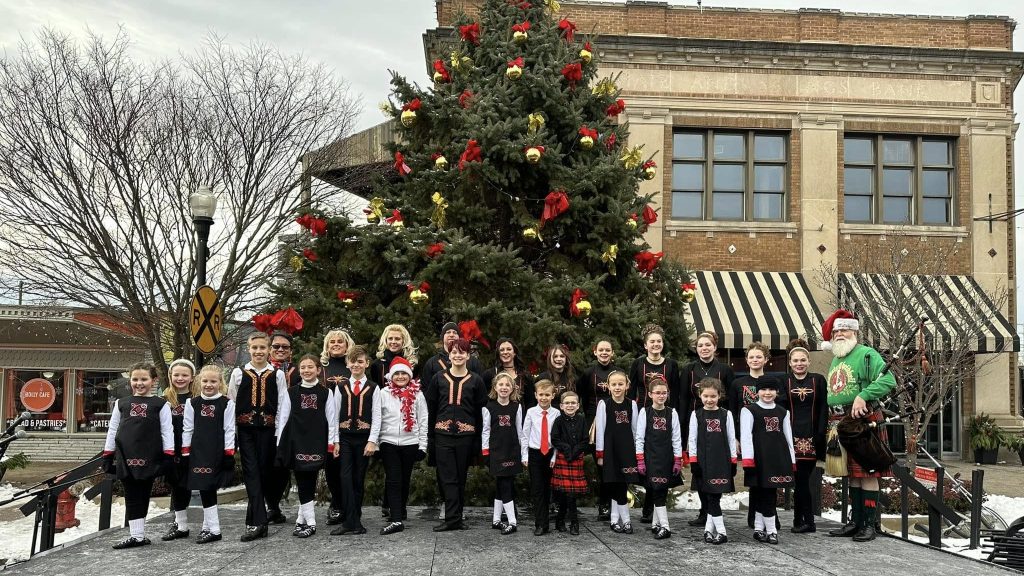
Irish dancing is a traditional form of dance originating in Ireland, known for its vibrant energy, precise footwork, and cultural significance. It can be performed solo or in groups and features intricate steps, often with upper body stillness and rhythmic movements. Dancers typically wear soft or hard shoes, depending on the style—soft shoes emphasize graceful jumps, while hard shoes create percussive sounds. Popularized globally by shows like Riverdance, Irish dance celebrates heritage, discipline, and artistry, making it a beloved tradition worldwide.
Beyond performance, Irish dancing fosters a sense of community and connection to Irish culture. It is often showcased at social events, festivals, and competitions known as feiseanna (singular: feis, pronounced “fesh”). These gatherings bring dancers of all ages together to celebrate their skills, share traditions, and pass on choreography that has been honed over generations.
The dance form is also known for its unique attire—colorful, embroidered dresses and vests—and for its music. Jigs, reels, and hornpipes are the lifeblood of Irish dance, played on traditional instruments like the fiddle, accordion, and bagpipes. Together, the music and dancing create an unforgettable cultural experience.
 Michigan Irish Dance Academy
Leave a comment